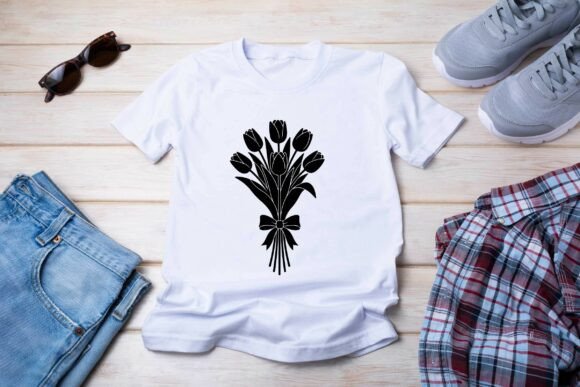
Tulip Bouquet Silhouette Review
As a designer who spends more time looking at stitch lines than actual flowers, I approach every new embroidery file with a healthy dose of skepticism. The market is flooded with generic clipart that looks fine on a screen but falls apart under the needle. When I first pulled up the Tulip Bouquet Silhouette, my initial reaction was one of cautious optimism. It promises to be a high-quality unique design, and after running it through my mental checklist for real-world application, I have some solid thoughts on where this design shines and where it might trip you up.
This is a digital product, meaning you are buying assets for your workflow, not a physical item. That distinction matters because the value lies entirely in how well the vector translates to thread. For Etsy sellers, small business owners, and craft fair vendors, the difference between a mediocre print and a premium embroidered look is often just a few pixels or a better choice of stitch type. Here is my practical breakdown of the Tulip Bouquet Silhouette as a viable option for your next project.
First Impressions: Mood and Visual Personality
The moment you load the Tulip Bouquet Silhouette, the mood is immediately established. Unlike busy floral patterns that can feel chaotic when stitched, this silhouette relies on clean, recognizable shapes. It feels fresh, modern, and distinctly feminine without being overly fussy. The visual personality is confident; it doesn’t need excessive detailing to communicate "spring" or "growth."
For a handmade product like a custom tote bag or a baby onesie, this simplicity is a strength. Complex designs often get lost in the texture of thick fabrics like sweatshirt fleece or canvas. A strong silhouette cuts through that noise. It creates a focal point that draws the eye immediately. Whether you are creating personalized gifts for a wedding or designing a line of kitchen towels, this design offers a versatile aesthetic that fits into both rustic farmhouse styles and modern minimalist boutiques.
Real-World Application: Where This Design Shines
I want to talk about specific use cases because that is where the rubber meets the road. Let’s imagine you are preparing a batch of custom embroidered aprons for a local bakery client. You need something that looks professional but isn’t so intricate that production times skyrocket. The Tulip Bouquet Silhouette works beautifully here. Because it relies on clear outlines rather than dense fill work, it stitches quickly and cleanly on cotton twill.
Consider another scenario: a boutique selling newborn sets. Parents love soft, delicate imagery. If you digitize this as an applique design or use a satin stitch outline on a light muslin fabric, the result is incredibly tender. It elevates a basic baby embroidery project from "cute" to "heirloom quality." The shape is simple enough that even a less experienced operator can execute it without puckering the fabric.
For commercial embroidery projects involving caps or hats, the compact nature of the bouquet silhouette allows it to fit comfortably within standard 4x4 hoops without feeling cramped. It provides a nice burst of color and form without overwhelming the curvature of the garment. Similarly, for tote bag design enthusiasts, placing this centrally on a canvas bag creates a striking graphic statement that holds up well to daily wear and washing.
Stitch Density and Fabric Considerations
One of the most critical aspects of any machine embroidery design is how it interacts with fabric texture. The Tulip Bouquet Silhouette performs best on stable, medium-weight fabrics. When I think about custom apparel like t-shirts or sweatshirts, I always consider the stretch. While tulips are organic shapes, their stems and leaves can sometimes pull if the underlying knit is too loose. In these cases, using a proper stabilizer is non-negotiable.
If you plan to use this for embroidered patches, the clean edges of the silhouette allow for excellent trimming and backing options. It looks sharp against denim or sturdy twill. However, if you attempt this on very thin, sheer fabrics without adequate support, the tension may cause distortion. Always test on scrap fabric first to gauge the interaction between your chosen thread colors and the fabric base.
Where to Exercise Caution
No design is perfect for every surface. There are specific situations where the Tulip Bouquet Silhouette requires careful planning. First, avoid using this on highly textured fabrics like chunky knits or bouclé unless you are doing a large-scale placement. The texture will compete with the clean lines of the design, resulting in a muddy appearance.
Second, be mindful of small hoop sizes. While the design is relatively compact, if you try to cram it into a tiny 2x2 inch area, you risk losing definition. The individual petals and leaves may merge together, turning what should be a detailed bouquet into a blurry blob. For such small applications, a simplified version or a single flower motif would be more appropriate.
Dark fabrics also present a challenge. If you are working with black or navy garments, you must ensure your stitch density is sufficient to cover the background completely. A single layer of satin stitch might show through the dark fabric, ruining the crispness of the white or light-colored threads. Layering your stitches or choosing a higher density setting can mitigate this, but it adds to the production time.
Practical Designer Notes for Success
To get the most out of the Tulip Bouquet Silhouette, follow these practical steps before committing to your final product:
- Test on Scrap Fabric: Never go straight to the customer’s item. Stitch the design on a piece of the same fabric you intend to use. This reveals issues with puckering, thread breakage, or color contrast that you wouldn’t see on a computer screen.
- Check Thread Color Contrast: Run a black-and-white mockup of your design. If the contrast between the thread and the fabric is low, the design will lack impact. High contrast ensures the visual appeal remains strong even from a distance.
- Review Stitch Types: Determine whether a satin stitch outline, fill stitch, or running stitch best suits your vision. Satin stitches offer a glossy, finished look ideal for logos, while running stitches provide a lighter, sketch-like aesthetic suitable for boho-style decor.
- Confirm Licensing: Before listing any finished product on Etsy or your own shop, verify the commercial usage rights. Some digital files are for personal use only. Ensuring you have the correct license protects your craft business from legal issues.
- Inspect Small Details: Zoom in on the digital file. Are there any tiny spikes or overlapping lines that might cause stitching errors? Cleaning up minor artifacts in your digitizing software can save hours of troubleshooting later.
Final Verdict
The Tulip Bouquet Silhouette is a reliable, aesthetically pleasing addition to any designer’s asset library. It strikes a balance between detail and simplicity, making it adaptable for a wide range of embroidery projects. From holiday embroidery gifts to professional branding on corporate merchandise, this design delivers consistent results when handled with care.
It is not a magic bullet that fixes poor digitization, but it is a strong foundation. By paying attention to fabric choice, stabilizer selection, and thread contrast, you can transform this digital graphic into a tangible, high-value handmade product. For creative entrepreneurs looking to expand their catalog with items that feel both personal and polished, this silhouette is a smart investment.
Ultimately, the success of your finished product depends on your execution. But starting with a well-proportioned, visually appealing design like the Tulip Bouquet Silhouette gives you a significant head start. It invites creativity, encourages experimentation, and, most importantly, looks good stitched into reality.