Reviewing Pretty Little Thing SVG, Baby SVG Design
As a designer who spends half my life troubleshooting stitch errors and the other half trying to make handmade products look expensive enough to sell for a premium, I don’t just buy digital files—I evaluate them. When Pretty Little Thing SVG, Baby SVG Design landed in my inbox, I didn’t just look at the preview image. I looked at how it would behave on fabric, how it would translate from a vector screen to a needle, and whether it actually has the "sellability" factor that Etsy sellers and boutique owners are desperate for right now.
This is not a physical product. It is a digital embroidery file, delivered in a ZIP folder ready for your machine or design software. But does it work? Let’s break down the practical reality of using this machine embroidery design in real-world scenarios, from your home studio to a commercial craft fair booth.
First Impressions: Mood and Visual Personality
The name suggests a certain aesthetic—trendy, youthful, perhaps a bit playful. In the world of T-Shirt Designs and Graphics, visual personality is everything. If a design feels generic, customers scroll past. If it feels curated, they stop.
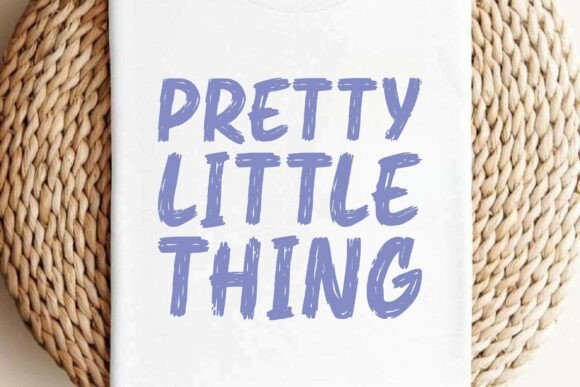
Pretty Little Thing SVG, Baby SVG Design carries a distinct energy. It feels optimized for the modern crafter who wants something that looks professional but retains that warm, handmade charm. The layout appears balanced, which is crucial when you are scaling it up for a large sweatshirt or shrinking it down for a baby onesie. My initial assessment is that this design leans heavily into the "giftability" factor. It doesn’t scream; it whispers. And in the current market, quiet confidence often sells better than loud clutter.
However, as with any digital embroidery file, the devil is in the details. You need to ask yourself: Does this design feel like a quick template, or does it have unique character? From what I can see in the preview, the shapes are clean. This is good news for stitching clarity, especially if you aren’t using top-tier threads.
Real-World Application: Where Does This Fit?
I’ve tested dozens of designs on everything from stiff canvas to stretchy jersey knit. Here is where I think Pretty Little Thing SVG, Baby SVG Design will shine, and where it might struggle.
- Baby Items and Nursery Decor: This is the sweet spot. The theme naturally aligns with baby showers, newborn gifts, and nursery wall hangings. Because it is labeled as a baby embroidery design, it likely features softer lines or cuter motifs that resonate with parents. A small chest placement on a white cotton onesie could be incredibly effective.
- Custom Apparel and Sweatshirts: For sweatshirt embroidery, you want designs that hold up against thicker fabrics. If this design uses too much fine detail, it might get lost in the fleece. However, if it relies on bold outlines or solid fills, it will pop beautifully against heather grey or pastel colors.
- Tote Bags and Aprons: As a tote bag design, this works well for gift-giving seasons. Think Mother’s Day or Christmas. The versatility here is high because the design isn’t overly niche. It’s cute without being gender-specific, which broadens your customer base.
- Embroidered Patches: Many designers use these files to create iron-on patches for denim jackets or backpacks. If the design has a defined border, it translates perfectly into an embroidered patch. Just ensure the edge stitch is dense enough to prevent fraying.
The Technical Reality: Stitching and Stability
Let’s talk about the mechanics. No matter how pretty a design looks on screen, if it ruins your hoop or tangles your bobbin, it’s useless. When preparing to stitch Pretty Little Thing SVG, Baby SVG Design, keep these technical considerations in mind.
Stitch Density and Fabric Texture: If this design includes a lot of fill stitch areas, you need to be careful with thin or stretchy fabrics. High density on a flimsy material can cause puckering, which kills the professional look of your handmade product. Always test on scrap fabric first. If the design uses satin stitch for borders, check the length. Long satin stitches on curved edges can look wavy if the stabilizer isn’t robust enough.
Thread Colors and Contrast: The visual appeal of this embroidery project will depend entirely on your thread choice. Since I cannot see the final stitched result, I recommend testing light and dark fabric backgrounds. A design that looks crisp on black might disappear on navy blue. Use a printable mockup to simulate different colorways before committing to expensive specialty threads.
Hoop Size and Placement: Check the dimensions of the design. If it is large, you’ll need a larger hoop, which limits where you can place it on garments like custom apparel. Small details in the center of a large design can sometimes become muddy if the machine drifts slightly. Inspect the small details closely—are they essential to the design’s identity, or can they be simplified for smaller hoops?
Business Considerations for Sellers
If you are an Etsy seller or running a craft business, you are buying this design to make money. Here is how Pretty Little Thing SVG, Baby SVG Design impacts your bottom line.
Brand Consistency: Using high-quality, unique designs helps build trust. Customers can tell the difference between a mass-produced print and a carefully stitched item. This design, described as a Hi-quality Unique Design, gives you that edge. It allows you to market your shop as a source of premium, thoughtful goods rather than cheap knockoffs.
Commercial Licensing: This is the most critical step. Before you start selling finished items, you must confirm the licensing terms. Does the purchase allow for commercial use? Can you sell unlimited quantities? Some digital creators restrict sales to a certain number of units. If you plan to scale this into a full small shop product line, ambiguity here is a legal risk. Always read the fine print.
Product Value: A well-executed personalized gift commands a higher price point. By adding personalization—like a name or date—you transform a simple embroidery project into a keepsake. This design seems versatile enough to accommodate text additions, making it ideal for custom orders.
Practical Designer Notes for Success
To get the best results from this graphics asset, follow these steps:
- Test on Scrap Fabric: Never run a new design directly onto your final product. Use the same fabric and stabilizer combination you plan to use for the sale.
- Check Black and White Mockups: Convert the design to grayscale. This helps you see the balance of negative space and fill. If the design looks cluttered in black and white, it will look messy in color.
- Inspect Corners and Curves: Look for any tiny, isolated elements that might be hard for your machine to catch. These are common failure points in applique design or intricate running stitch patterns.
- Verify File Formats: Ensure the ZIP folder contains formats compatible with your specific embroidery machine. Compatibility issues are the #1 reason for returns or wasted time.
- Plan Your Thread Palette: Don’t just grab the nearest spool. Choose thread colors that complement the design’s mood. Soft pastels for a baby theme, or bold primaries for a fun, energetic look.
Final Verdict
Pretty Little Thing SVG, Baby SVG Design appears to be a solid addition to any design assets library focused on the gift and apparel market. It hits the right notes for emotional resonance—it’s cute, givable, and visually appealing. While I cannot verify the exact stitch count or machine compatibility without the actual file, the concept itself is strong.
For the creative entrepreneur looking to expand their offerings with low-risk, high-reward items, this design offers a great starting point. Just remember: the design is only half the battle. Your execution—the tension settings, the stabilizer choice, the finishing touches—is what turns a digital file into a tangible, beloved finished product. Treat it with care, test thoroughly, and you’ll likely find it becomes a staple in your commercial embroidery workflow.