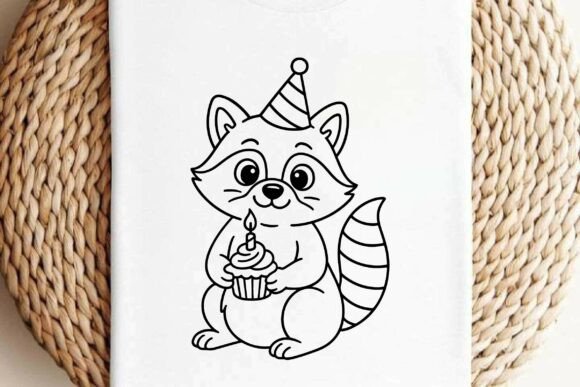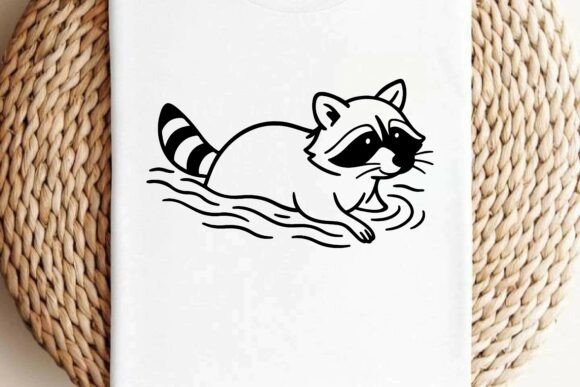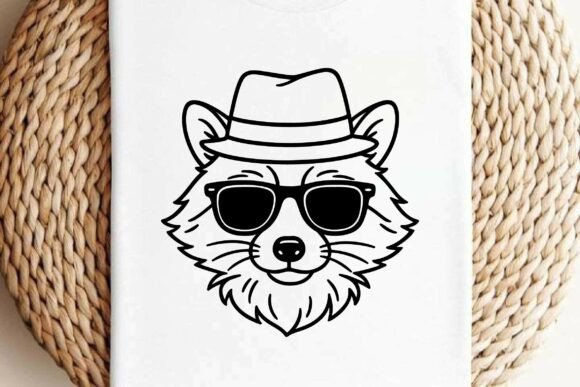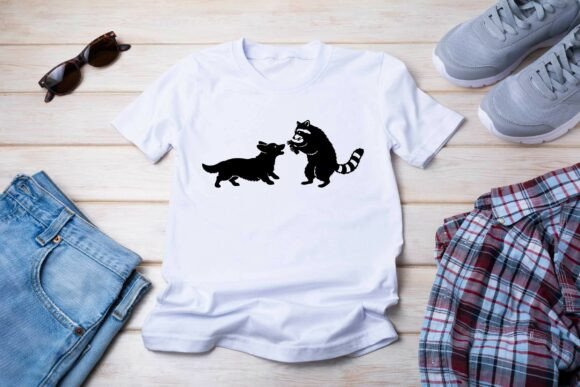
Corgi Raccoon Silhouette Clipart Vector
As a designer who spends half my life staring at stitch charts and the other half trying to convince clients that embroidery isn’t just for monograms, I approach every new asset with a healthy dose of skepticism. We have all seen the endless scroll of generic clip art on marketplaces. But occasionally, something catches the eye—not because it is loud, but because it has character. That was my reaction when I first pulled up Corgi Raccoon Silhouette Clipart Vector. It is not just another illustration; it is a potential centerpiece for a very specific kind of handmade product.
I do not deal in physical goods, so I am reviewing this strictly as a digital design asset intended for real-world application. My goal here is to determine if this silhouette holds up under the scrutiny of an embroidery machine, whether it translates well to various fabrics, and if it actually adds value to a small business inventory or a personal gift project.
The First Impression: Mood and Visual Personality
When you look at a silhouette, you are looking at pure shape language. There is no shading to hide behind, no gradient to soften the edges. What remains is the outline and the negative space. The Corgi Raccoon Silhouette Clipart Vector succeeds immediately because it balances two distinct visual personalities: the rounded, approachable cuteness of a corgi and the mischievous, masked identity of a raccoon.
The mood it creates is playful yet sophisticated. It avoids the overly childish aesthetic that plagues many nursery designs by relying on clean lines. For a designer, this is crucial. It means the design can pivot. It can be stitched onto a baby onesie with pastel threads for a sweet, innocent look, or it can be rendered in high-contrast black and white thread on a dark hoodie for a streetwear vibe. The vector nature ensures that these lines remain crisp regardless of how much I scale them down for a patch or up for a large wall hanging.
Real-World Application: Where Does This Design Belong?
In my experience, the most successful embroidery projects are those where the design feels native to the item. A complex floral bouquet might feel out of place on a rugged work apron, but a bold silhouette like this one fits almost anywhere. Here is how I see this design performing in actual production scenarios:
- Custom Apparel and Streetwear: This is perhaps the strongest use case. Imagine a heavyweight cotton sweatshirt with the raccoon-corgi hybrid embroidered in thick, textured fill stitches across the chest. The silhouette provides enough visual weight to stand out against the fabric texture without looking cluttered. It appeals to the "cute but cool" demographic that dominates Etsy and Instagram shops right now.
- Baby and Nursery Decor: Because the shape is rounded and soft, it works beautifully for baby items. A tiny embroidered version on a muslin blanket or a hooded towel is incredibly marketable. Parents love unique identifiers for their children’s gear, and this design offers a conversation starter that goes beyond standard animals.
- Tote Bags and Canvas Goods: Tote bags are the bread and butter of many craft businesses. A single-color satin stitch outline of this silhouette on a natural canvas bag is chic, minimalist, and highly professional. It elevates the product from a simple accessory to a branded statement piece.
- Holiday and Seasonal Gifts: While not explicitly seasonal, the whimsical nature of the animal mashup makes it perfect for year-round gifting. It fits seamlessly into holiday markets as a unique ornament or a decorative pillow cover for a guest room.
Technical Considerations for Embroidery Execution
Being a great digital graphic does not automatically make a great embroidery file. The translation from screen to needle introduces variables that can ruin even the best design. Here is what I would scrutinize before running this through my machine:
Stitch Density and Fill Areas: If this design relies heavily on fill stitches to create the body of the animal, I need to ensure the density is appropriate for the fabric. On stretchy knit fabrics, such as t-shirts or sweatshirts, too much dense stitching can cause puckering. I would likely recommend using a tear-away stabilizer for lighter fabrics and a cut-away for heavier knits to maintain stability. The silhouette’s solid shapes are generally forgiving, but checking the stitch direction is vital to avoid a lumpy appearance.
Detail Level and Hoop Size: Silhouettes are often praised for their simplicity, but they can suffer if placed in a hoop that is too small. If the details of the ears or the tail are too fine, they may get lost or become difficult for the machine to execute cleanly. I always advise testing the design in your smallest anticipated hoop size first. If the design includes tiny lettering or intricate accents alongside the main image, those elements must be evaluated for clarity. In a finished product, blurry details scream "low quality," whereas clean, bold lines signal professionalism.
Thread Color Contrast: The success of any silhouette depends entirely on contrast. On dark fabrics, light threads will pop, but on light fabrics, you need darker threads or a contrasting backing applique. This design lends itself well to applique techniques. By cutting the shape from a contrasting fabric and stitching a satin stitch border around it, you eliminate any risk of the background fabric showing through and add a premium, tactile dimension to the embroidered patch or garment.
Risks and Areas for Caution
While this design is versatile, it is not without its pitfalls. I would exercise caution when attempting this on curved surfaces like baseball caps. The curvature can distort the symmetry of the silhouette, making the animal look distorted unless the design is specifically digitized for cap embroidery. Similarly, on textured fabrics like chenille or heavy wool, the smooth lines of the vector might get swallowed by the nap of the fabric. In these cases, a simpler running stitch outline might yield a more artistic result than a dense fill.
Another consideration is washing durability. If this is intended for a custom apparel item that will undergo frequent laundering, the thread choice matters. Polyester embroidery thread is generally preferred for its sheen and strength, but ensuring the knotting is secure is essential to prevent unraveling over time.
Value for Small Business and Commercial Use
For the Etsy seller or small shop product owner, the appeal of Corgi Raccoon Silhouette Clipart Vector lies in its adaptability. One design can serve multiple niches. You can market it to dog lovers, raccoon enthusiasts, and fans of quirky art simultaneously. This broadens your potential customer base without requiring you to purchase multiple separate files.
Furthermore, the vector format allows for easy customization. You can adjust the scale, rotate the orientation, or combine it with other elements to create unique variations. This is invaluable for creating personalized gifts where customers might request initials or dates integrated into the design. The clean lines ensure that adding text does not clutter the composition.
However, commercial rights must be verified. Before listing this on your shop or using it in client work, confirm the licensing terms. Some digital assets allow unlimited commercial use, while others restrict the number of physical items you can sell. Assuming the license permits it, this design offers a high return on investment due to its low cost and high perceived value in a finished product.
Final Verdict
After mentally placing this design on various products—from a delicate baby bib to a sturdy work apron—I find that Corgi Raccoon Silhouette Clipart Vector is a strong candidate for inclusion in any modern embroidery library. It strikes a balance between whimsy and professionalism that is hard to find. It is not over-designed, which gives it longevity, and its silhouette nature makes it technically forgiving for embroiderers of all skill levels.
If you are looking to expand your range of design assets with something that stands out without shouting, this is a smart addition. Just remember to test on scrap fabric, choose your stabilizer wisely, and let the clean lines speak for themselves. In a market flooded with noise, sometimes the simplest shape is the loudest statement.